Can You Use Baking Soda on Spider Plants? Myths & Facts
Baking Soda and Spider Plants: Helpful Remedy or Harmful Myth?
Spider plants are known for being hardy, adaptable houseplants, so it’s no surprise that gardeners are always looking for new ways to encourage faster growth and more spider plant babies. One common claim online is that baking soda can somehow stimulate spider plants to produce more offshoots or babies. But is there actually any truth to that?
While baking soda does have a few limited uses in gardening, it is not a fertilizer or growth booster for spider plants. In fact, using too much can sometimes do more harm than good. Before adding baking soda to your plant care routine, it’s important to understand what it actually does, when it may help, and why the “more babies” myth is largely misleading.
Does Baking Soda Make Spider Plants Produce More Babies?
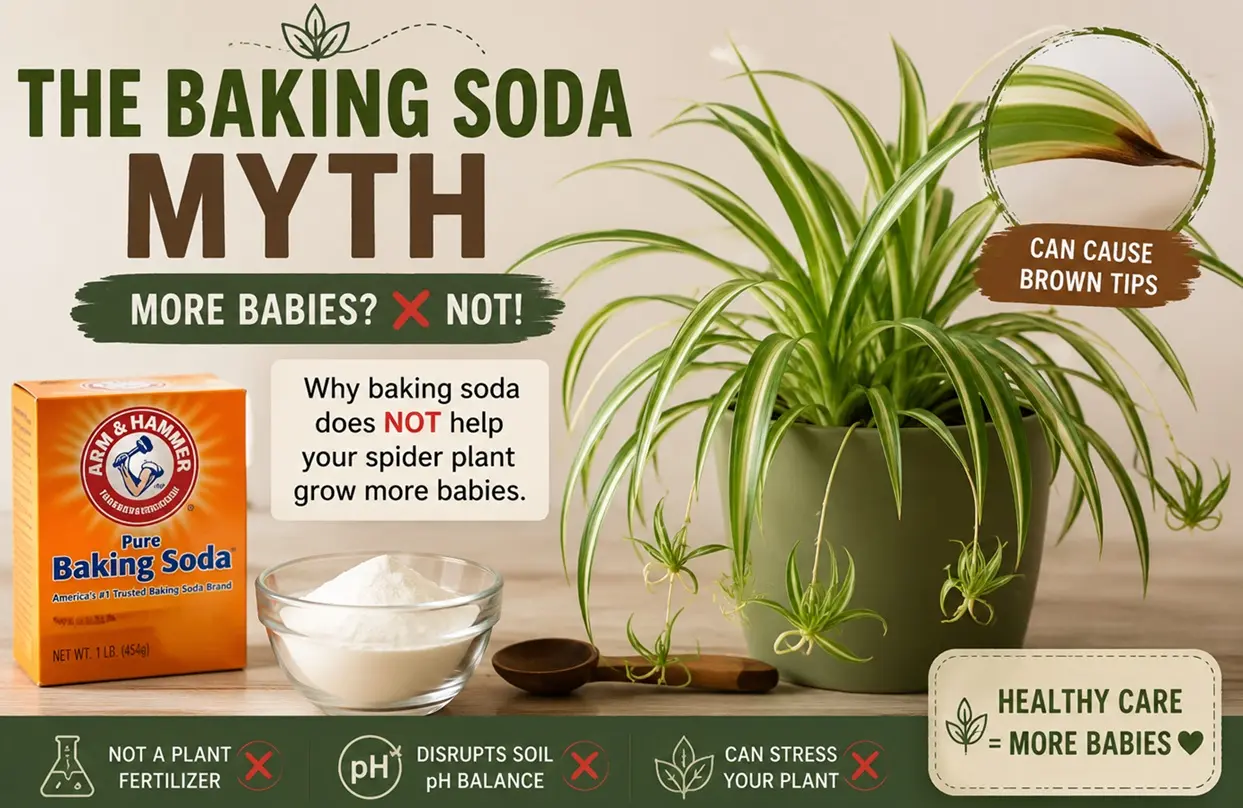
No, baking soda does not directly cause spider plants to produce more babies. In fact, its high salt content can be harmful if used frequently, potentially stunting the plant’s growth rather than encouraging it. While some social media “hacks” suggest using baking soda to improve soil or help plants, these claims are often misleading. Baking soda is primarily a fungicide or a mild pH adjuster, not a growth-promoting fertilizer.
Spider plant babies are produced when the plant is mature, healthy, and growing in the right conditions — not because of baking soda. While some online gardening tips claim baking soda can somehow “boost” baby production, there is no scientific evidence showing that it increases spider plant offshoots or stimulates flowering.
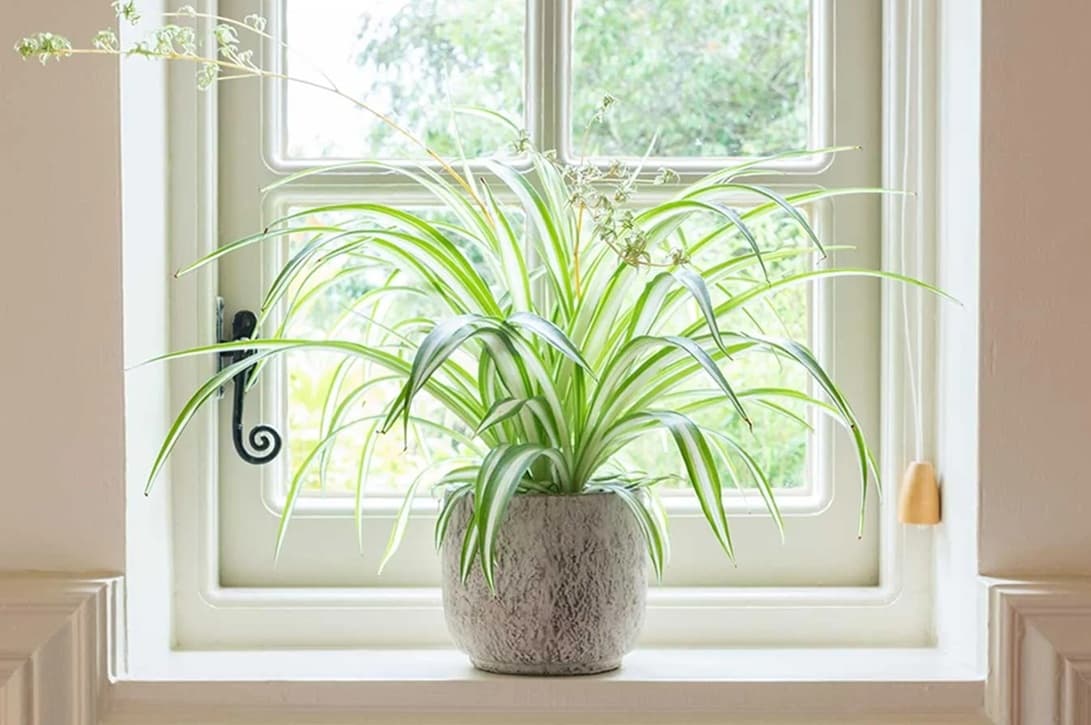
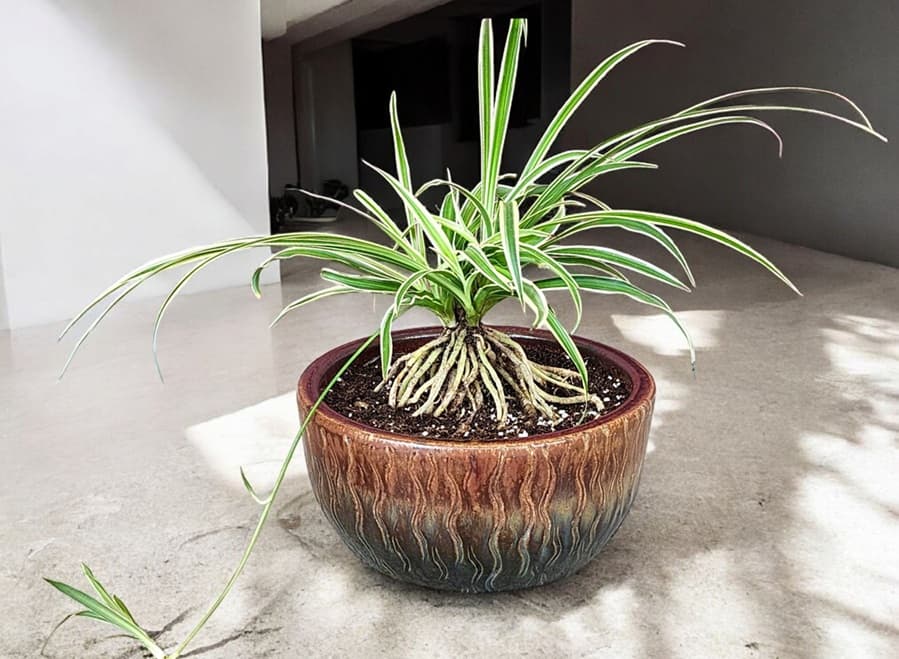
In reality, spider plants produce more babies when they receive bright indirect light, proper watering, occasional feeding during the growing season, and enough room to establish a strong root system. Mature spider plants that become slightly root bound are also more likely to produce flowers and baby plantlets naturally.
Some gardeners may mistakenly believe baking soda helped because their plant happened to produce babies shortly after using it. However, this is usually due to seasonal growth cycles, improved lighting, plant maturity, or other care changes happening at the same time.
Baking soda is not a fertilizer and does not contain the nutrients spider plants need for healthy growth or baby production. In some cases, excessive use may actually stress the plant due to salt buildup in the soil.
Why You Should Avoid Using Baking Soda on Spider Plants
Although baking soda is sometimes recommended online as a natural plant remedy, it is not something I personally recommend using regularly on spider plants. Spider plants are sensitive to salt buildup, and because baking soda contains sodium, repeated use can create more problems than benefits over time.
One of the biggest issues is that baking soda can disrupt the soil’s natural balance. Too much sodium may interfere with the plant’s ability to absorb water and nutrients properly, which can eventually lead to brown leaf tips, dry edges, slowed growth, or stressed roots. In some cases, it may even worsen the very problems people are trying to fix.
Another concern is that many online gardening “hacks” are not tested specifically on spider plants. What works temporarily for one plant species may not be safe for another long-term. Spider plants generally thrive best with simple, consistent care rather than homemade additives or quick fixes.
Instead of using baking soda to encourage healthier growth or more babies, focus on the conditions spider plants naturally prefer:
- Bright indirect light
- Proper watering habits
- Well-draining soil
- Occasional fertilizing during the growing season
- Allowing the plant to become slightly root bound
These factors are far more effective for encouraging healthy spider plant babies and long-term growth than adding baking soda to the soil.
Common Uses for Baking Soda On Spider Plants
Can you use baking soda on spider plants?
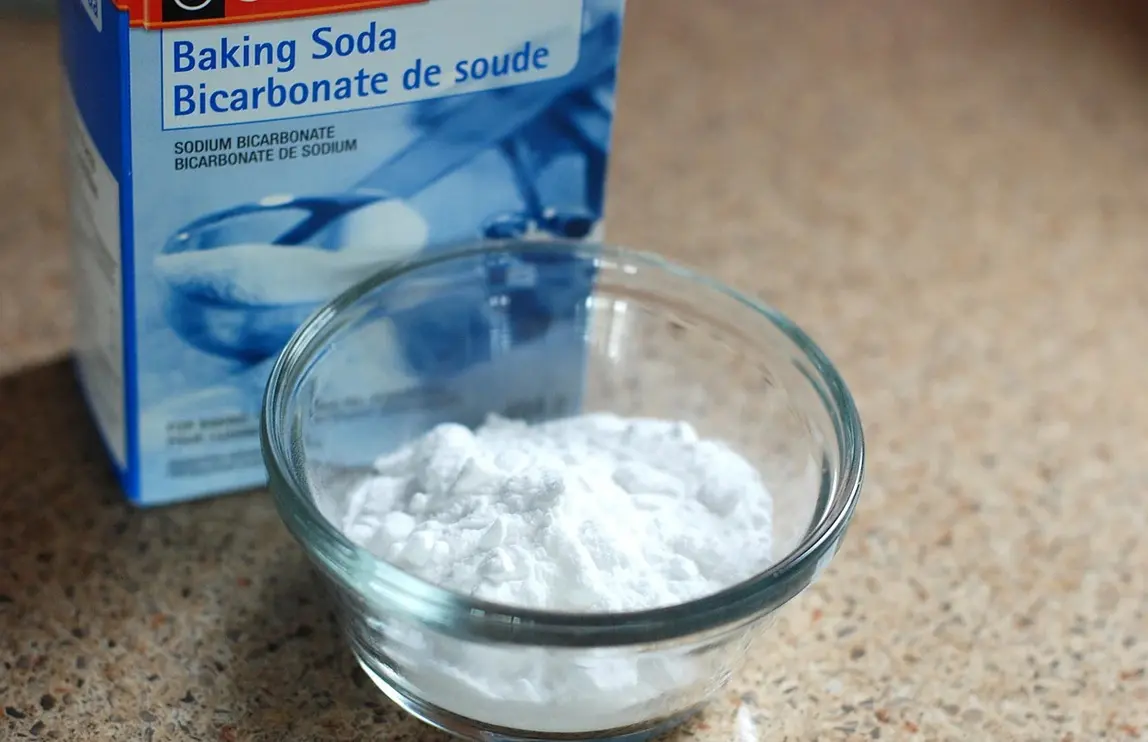
Yes, you can use baking soda on spider plants, but it must be done with caution. While it isn’t a standard fertilizer, it is often used as a home remedy for specific issues like fungal infections or pests. However, because baking soda is a salt (sodium bicarbonate), overusing it can lead to salt buildup in the soil, which may dry out the roots or burn the leaves.
If you do choose to use baking soda on your spider plant, it is typically applied in the following ways:
- Fungal Treatment: To manage leaf spots or powdery mildew, a diluted spray is often recommended. Recipe: Dissolve 1/2 to 1 teaspoon of baking soda and 1 teaspoon of liquid soap in a gallon of water.
- Pest Deterrent: Some gardeners use a light sprinkle around the base or a spray to deter ants, aphids, and spider mites.
- Soil pH Adjustment: It can be used in very small amounts to neutralize overly acidic soil, though this is rarely necessary for spider plants which prefer slightly acidic to neutral soil.
Potential Risks
- Leaf Burn: Spraying baking soda solutions in direct, hot sun can cause the foliage to burn.
- Salt Toxicity: Frequent use can cause sodium to build up, leading to stunted growth or brown, crispy leaf tips—a common issue for spider plants which are already sensitive to minerals like fluoride.
- Root Damage: High concentrations of baking soda can damage the delicate root systems of indoor spider plants.