How Do You Know When To Repot a Spider Plant?
When to Repot a Spider Plant: Signs Your Plant Needs a Bigger Pot
Before you grab your potting mix and a bigger container, take a minute to make sure your spider plant actually needs to be repotted. Spider plants are a lot like other easy houseplants—snake plants, Pothos, Philodendron, and ZZ plants—they don’t mind being a little root-bound. In fact, they often thrive that way for a while.
But there’s a tipping point.
When a spider plant becomes too root-bound, the roots start taking over the entire pot. At that stage, there’s barely any soil left to hold nutrients or moisture. You might notice soil slipping out of the drainage holes, or the potting mix becoming hard and compacted. Once that happens, your plant can’t get what it needs—and it will start to show it.
One of the quickest ways to check is to look at the bottom of the pot. If you see roots growing out of the drainage holes, your plant is already searching for more space. You may also notice yellowing or browning leaves, which can mean the plant isn’t getting enough nutrients. Sometimes it even looks like a watering issue—especially if water runs straight through the pot instead of soaking in.
If that’s happening, it’s not just thirsty—it’s outgrown its home.
And that’s your cue: it’s time to repot your spider plant into fresh soil with a little more room to grow.
What Do healthy Spider Plant Roots Look Like?
Unhealthy Spider Plant Roots
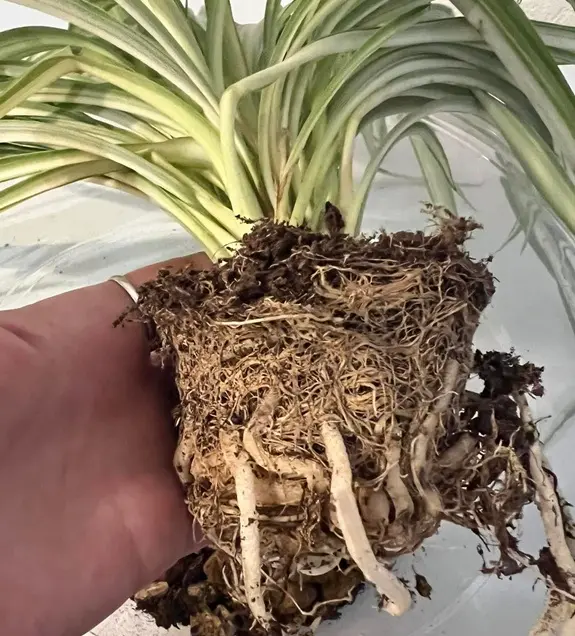
Root bound with brown root rot
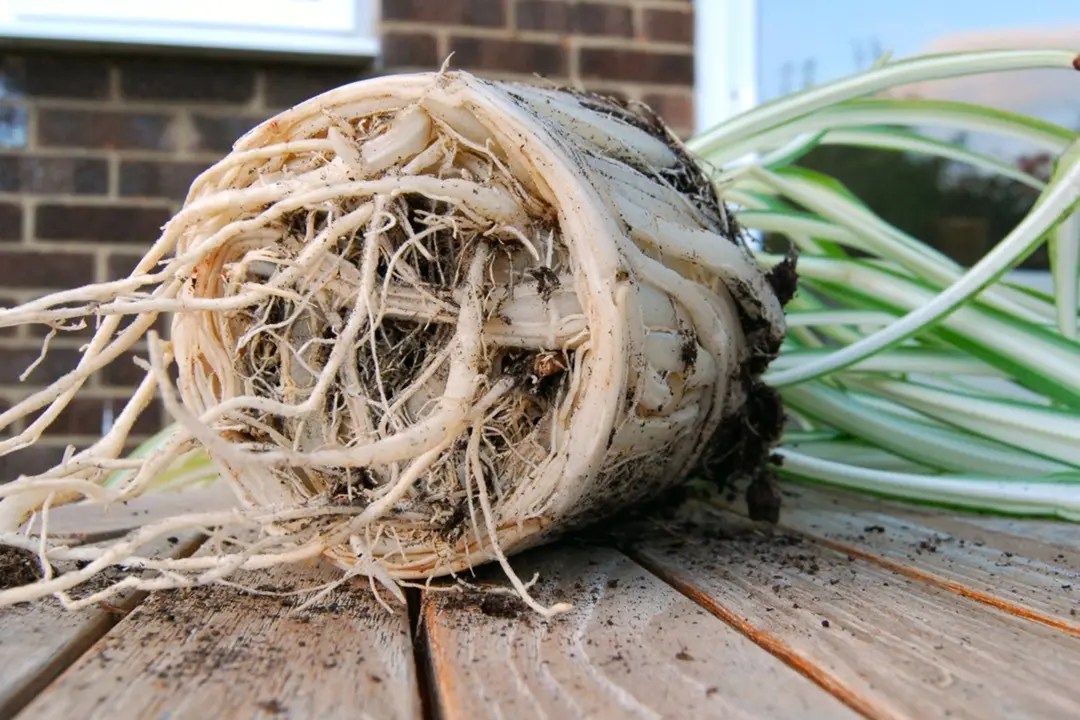
Healthy Spider Plant Roots
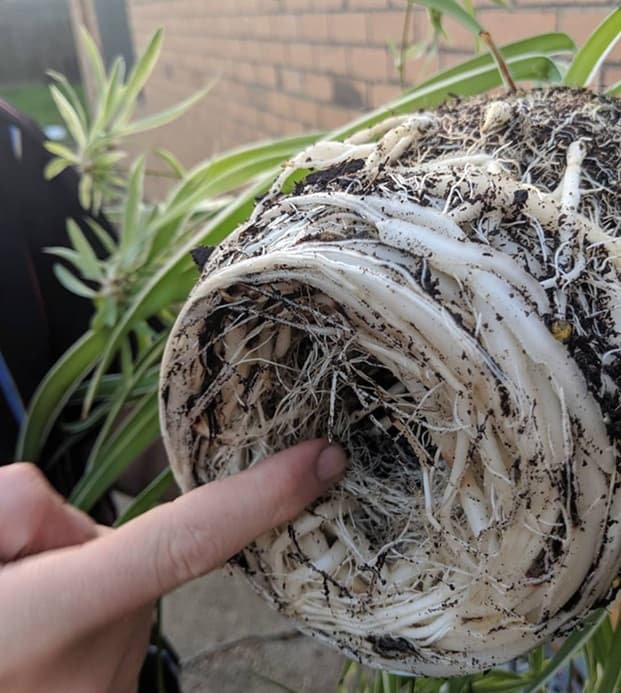
Healthy white roots & tubers ready to be repotted
Visible Signs & Best Time to Repot a Spider Plant
Spider plants actually thrive when they are slightly root-bound, which often triggers them to produce more flowers and “babies” (spiderettes). However, you should consider repotting when the plant moves from “snug” to “struggling”.
Best Timing & Pot Choice
If you’re wondering when to repot a spider plant, the answer really comes down to paying attention to what your plant is telling you. Are spider plant roots coming out of the pot? Spider plants don’t mind being a little snug in their pots, but once the roots take over and the soil can’t hold water or nutrients anymore, they start to struggle.
Look for the simple signs: roots creeping out of the drainage holes, water running straight through the pot, or leaves starting to yellow or brown without another clear cause. These are all signals your plant has outgrown its space.
Repotting at the right time gives your spider plant a fresh start—with new soil, better moisture retention, and room to grow. And when you get it right, you’ll usually see the reward pretty quickly: healthier leaves, stronger growth, and even more baby spiderettes.
When to Repot a Spider Plant: FAQs
Repot spider plants (Chlorophytum comosum) when they become too root-bound typically every 1–2 years, during early spring or summer. Key signs include roots growing out of the drainage holes, roots showing above the soil surface, or the plant pushing itself upward. They thrive with some restriction, so only repot when absolutely necessary.
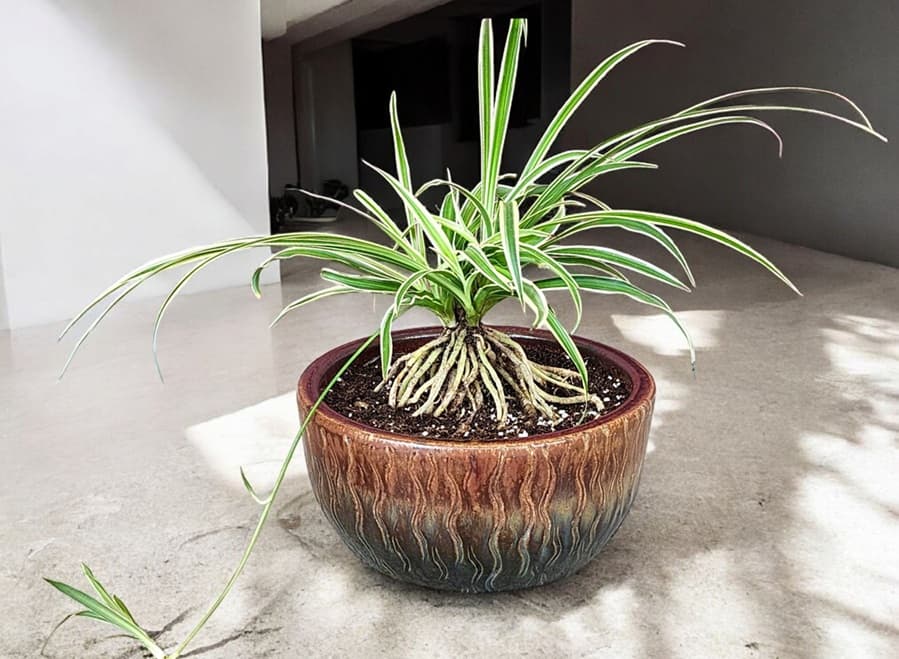
If your spider plant roots are exposed its often a sign of being severely pot-bound (root-bound). While they thrive with tight roots, they should be repotted into a container 2-3 inches larger if roots are forcing the plant up or out. Alternatively, they can be styled as “bonsai-style” with intentionally exposed woody roots.
Yes, it is generally okay to leave a spider plant root-bound, as they actually prefer a crowded container and this often forces them to produce more babies. While they can handle being root-bound for long periods, they should be repotted if the roots are cracking the pot, the plant seems dried out, or when growth halts.
 Unhealthy spider plant roots are characterized by a dark brown or black color, a mushy or slimy texture, and a foul, rotting smell. Instead of being firm and white, these decaying roots—often caused by overwatering—may fall apart or break off easily when touched.