How to Fix Yellow Leaves on a Spider Plant (Causes & Quick Fixes)
Why Your Spider Plant Has Yellow Leaves (And How to Fix It Fast)
Why Do Spider Plant Leaves Turn Yellow?
Yellow leaves on a spider plant are one of the most common problems plant owners run into—but the good news is, it’s usually easy to fix once you know the cause. Spider plants turn yellow primarily due to overwatering (causing root rot), underwatering, or sensitivity to tap water chemicals. To fix it, ensure the top 50-75% of soil dries between waterings, use filtered/distilled water, provide bright indirect light, and ensure proper drainage.
Whether your plant is getting too much water, not enough light, or dealing with root stress, those yellowing leaves are your plant’s way of telling you something isn’t quite right. In this guide, we’ll break down exactly why spider plant leaves turn yellow and what you can do to bring your plant back to healthy, vibrant growth.
What does an overwatered spider plant look like?
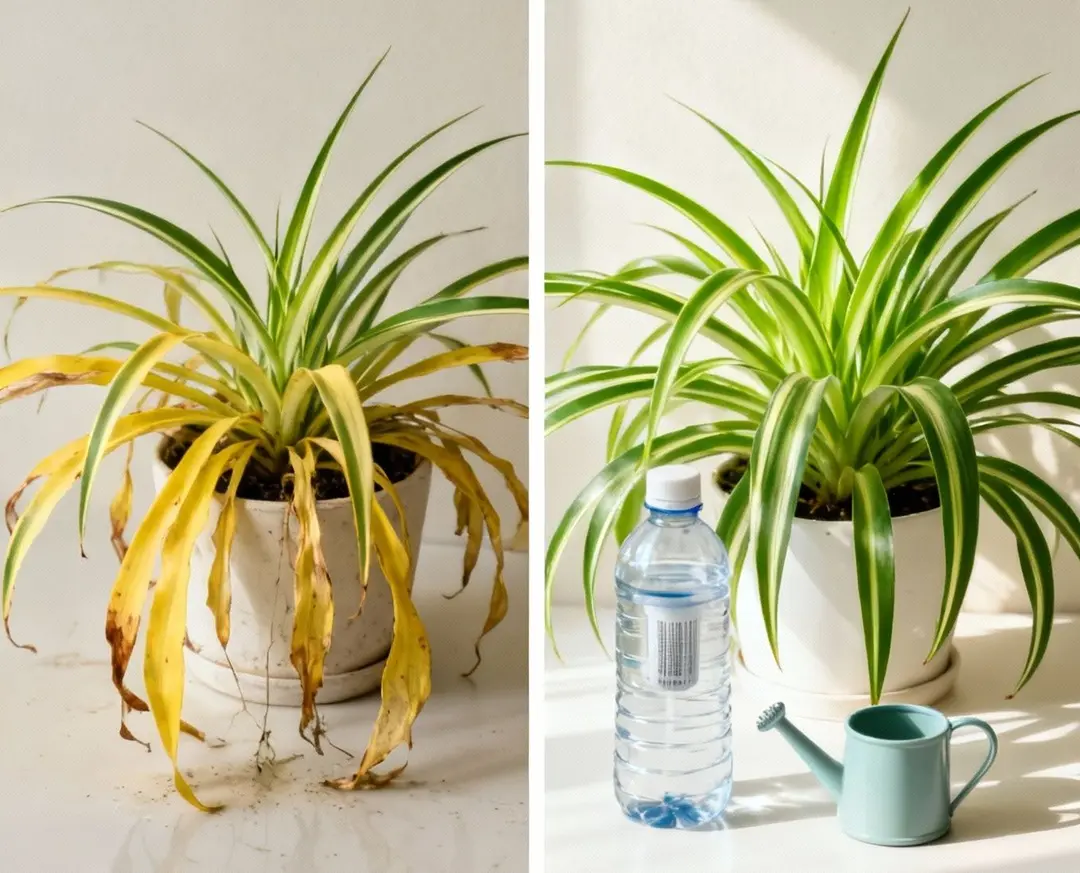
Spider Plant Yellow Leaves Before and After Fix
Common Causes of Yellow Leaves On Spider Plants
What to do if your spider plant’s leaves turned yellow
Yellowing leaves are often related to aging, over watering, nutrient deficiency, or low light. Here are the specific causes and solutions for yellow leaves on spider plants:
Why are my spider plants leaves yellowing?
🤫 The Spider Plant Lady’s Fixing Yellow Leaves Secrets
- To fix yellowing leaves on a spider plant: 💧 Immediately switch to using Spring water, distilled water or rainwater to eliminate fluoride sensitivity, which often causes yellow tips. For a quick recovery, trim severely damaged leaves, reduce water to only when the top two inches of soil are dry, and ensure bright, indirect light.
- The “Sugar Cure”: Mix 1 teaspoon of sugar in 1 liter of boiled water (cooled) to feed the plant, strengthening it once a month.
- Root Check: If the entire plant is yellowing, check for root rot. If the soil is waterlogged, prune rotting roots and repot in fresh, well-draining soil.
- Immediate Pruning: Trim yellow or brown leaves at the base with clean scissors, as these will not turn green again.
- Humidity Boost: Yellow leaf tips indicate low humidity. Mist the plant or use a pebble tray to increase moisture in the air.
How to Bring Your Spider Plant Back to Healthy Growth
Yellow leaves on a spider plant might look alarming at first, but in most cases, they’re a simple signal that something in your care routine needs adjusting. By checking your watering habits, lighting conditions, and root health, you can quickly pinpoint the cause and get your plant back on track.
With a few small changes, your spider plant can bounce back and continue producing the lush, vibrant green growth it’s known for. Stay consistent, pay attention to what your plant is telling you, and you’ll have a healthy, thriving spider plant in no time.
How To Fix Yellow Leaves on a Spider Plant FAQs
Yes, you can safely trim off yellow spider plant leaves, especially if they are fully discolored or damaged. Removing yellow leaves helps improve the plant’s appearance and allows it to focus its energy on producing new, healthy growth.
Use clean, sharp scissors and cut the leaf at the base, close to the soil line. If only the tip is yellow or brown, you can trim just the affected portion while following the natural shape of the leaf.
Keep in mind that removing leaves does not fix the underlying problem. Be sure to identify and correct the cause—such as watering issues or lighting conditions—to prevent further yellowing.
No, once a spider plant leaf has turned fully yellow, it will not turn green again. Yellowing means the leaf has lost chlorophyll, which is essential for photosynthesis and healthy growth. However, this doesn’t mean your plant is beyond saving. New growth can still come in healthy and green once the underlying issue is corrected.
If only part of the leaf is yellow, you can trim the damaged section to improve the plant’s appearance. Focus on fixing the root cause—such as overwatering, poor lighting, or nutrient imbalance—to prevent additional leaves from turning yellow. Healthy care going forward is the key to restoring your spider plant’s overall look.
Reviving a yellowing spider plant starts with identifying what’s causing the stress. The most common reasons include overwatering, underwatering, poor drainage, low light, or being root-bound. Start by checking the soil—if it’s constantly wet, allow it to dry out and ensure the pot has proper drainage. If the soil is bone dry, give your plant a deep, thorough watering.
Next, evaluate lighting. Spider plants prefer bright, indirect light. Too little light can weaken the plant, while too much direct sun can cause leaf damage. Adjust placement as needed.
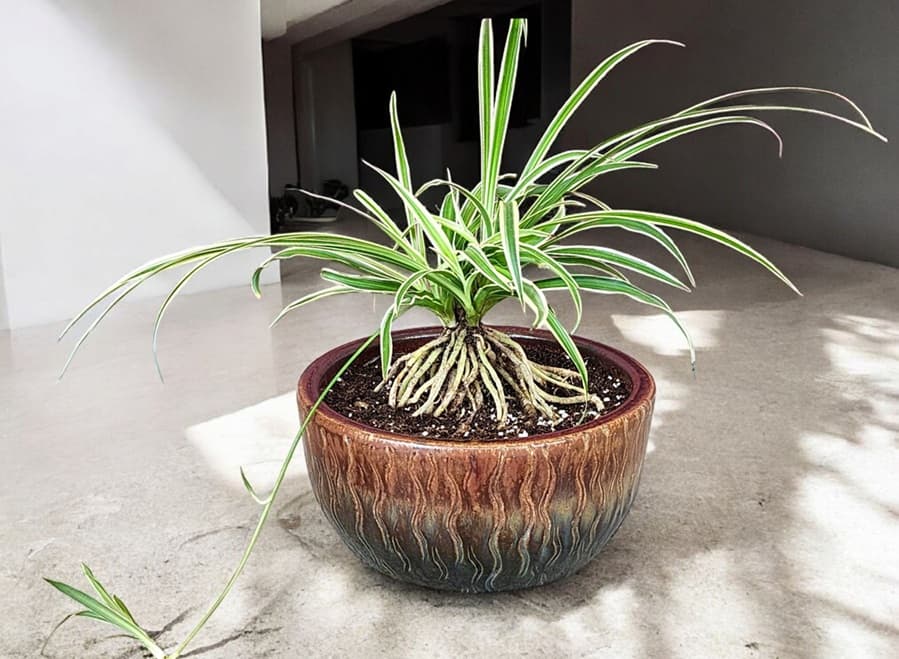
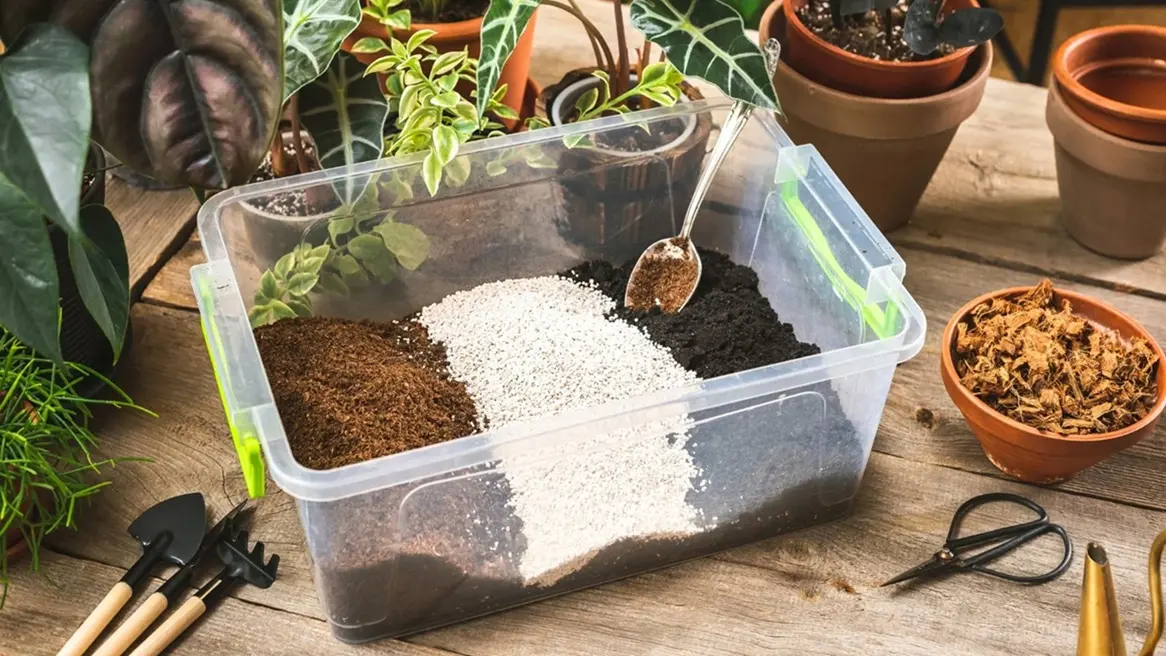
If the plant is root-bound (roots tightly packed or growing out of the pot), repot it into a slightly larger container with fresh, well-draining soil. You can also trim away severely damaged leaves to help the plant focus its energy on new growth. With consistent care, most spider plants recover quickly.
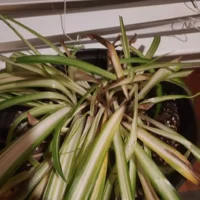
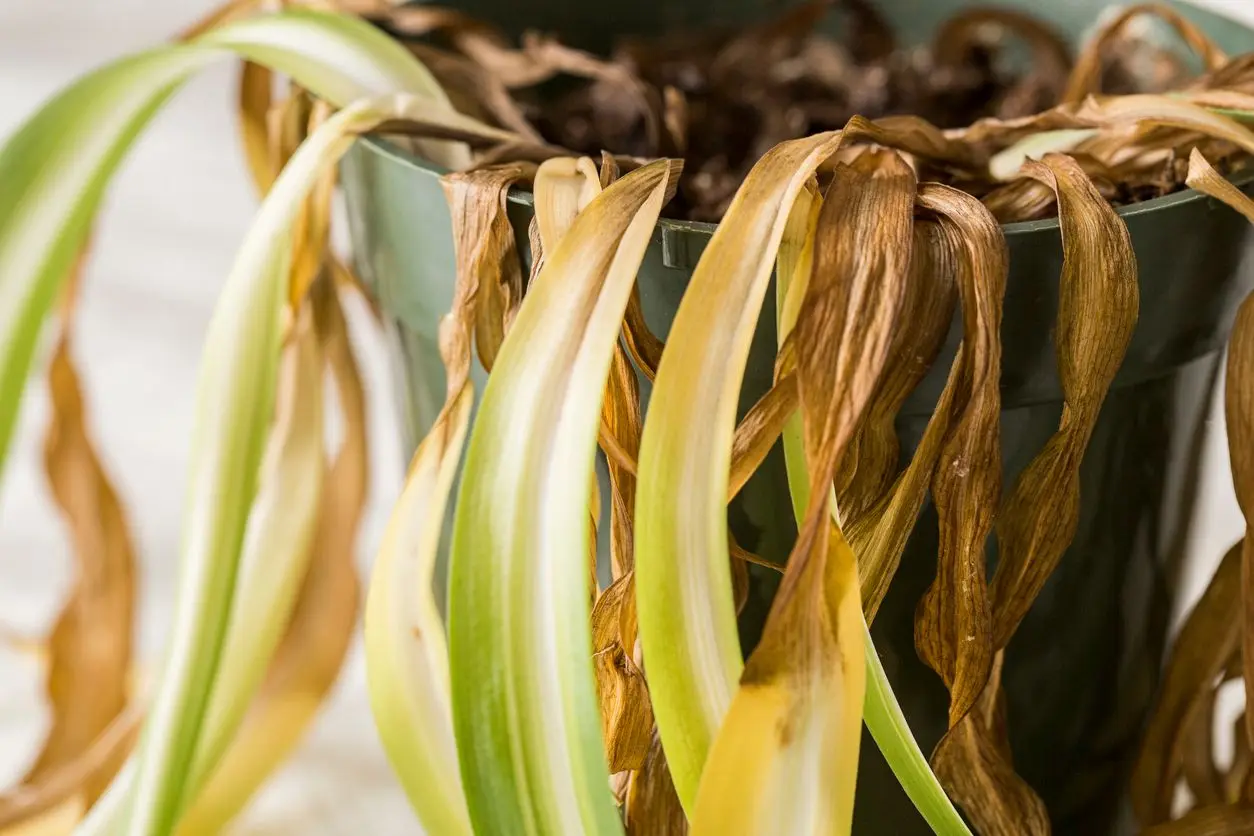
A spider plant suffering from overwatering, showing browning and yellowing leaves—one of the most common houseplant care mistakes.
An overwatered spider plant typically shows yellowing leaves, especially near the base, along with a droopy or limp appearance.
The leaves may feel soft or mushy rather than firm, and the soil will often remain wet for long periods. In more severe cases, you may notice a sour or musty smell coming from the soil, which can indicate root rot.
Other signs include blackened roots, stunted growth, and leaves that fall off easily. Overwatering is one of the most common causes of spider plant decline, as their roots need oxygen as much as they need water.
To fix this, allow the soil to dry out before watering again, and make sure your pot has proper drainage holes. If root rot is present, you may need to remove the plant, trim affected roots, and repot it in fresh soil.
It’s common for spider plants to develop yellow leaves after repotting due to transplant shock. When a plant is moved to a new pot, its roots can become temporarily stressed or disturbed, which can affect how it absorbs water and nutrients. This often results in a few yellowing leaves shortly after the move.
Other factors can also contribute, such as using the wrong type of soil, overwatering after repotting, or placing the plant in a new environment with different lighting conditions.
To help your plant recover, keep the soil lightly moist (not soggy), place it in bright, indirect light, and avoid fertilizing for a couple of weeks. Most spider plants adjust quickly and will resume healthy growth once they settle into their new container.