Do Spider Plant Babies Drain Energy From the Mother Plant?
Understanding How Spider Plants Support Their Babies
Why Healthy Mother Plants Can Support Dozens of Spiderettes
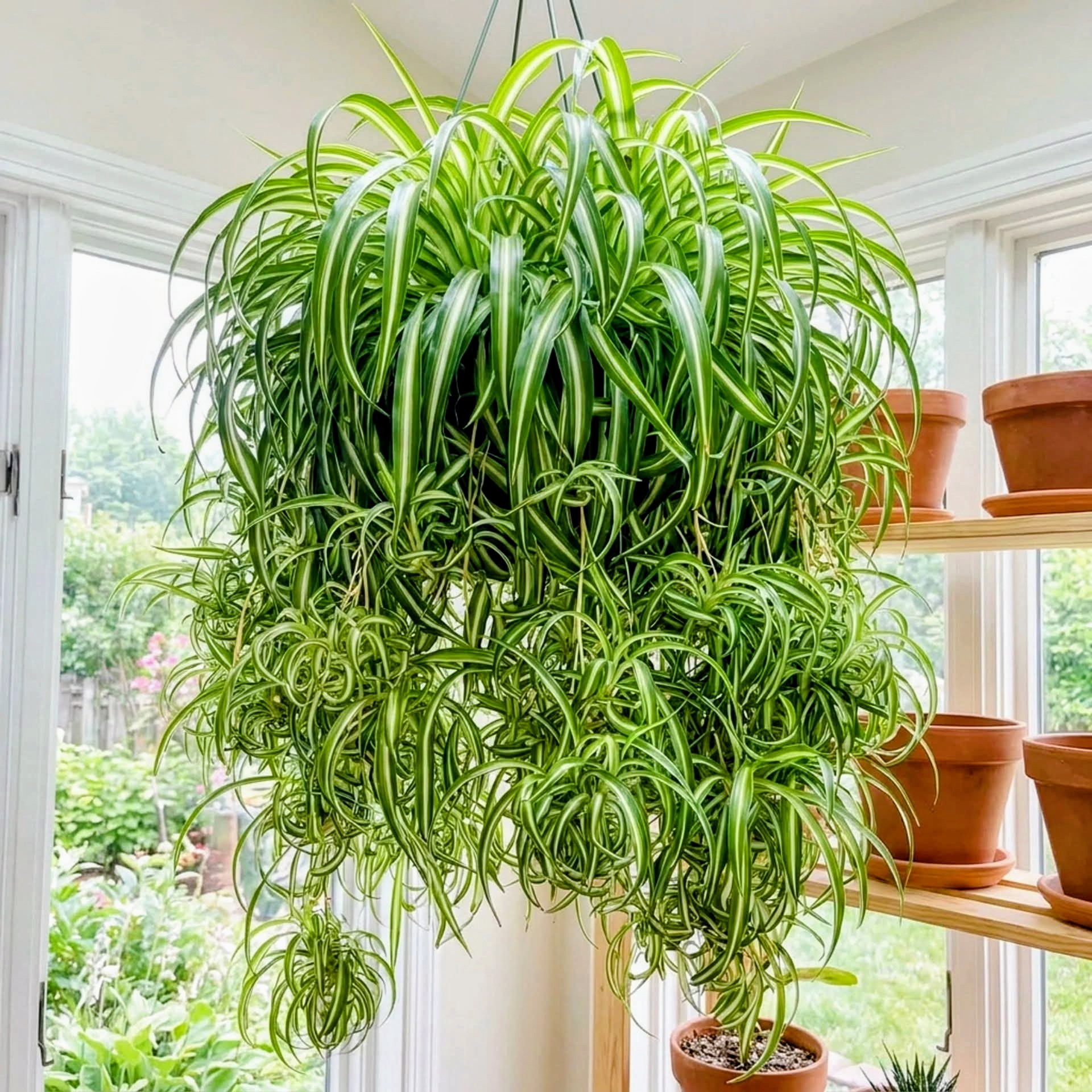
Look at this gorgeous Bonnie curly spider plant! 💚 With its beautiful cascading curls and dozens of dangling spider plant babies, it’s a perfect example of something many plant owners misunderstand.
You’ve probably heard someone say, “You need to cut those babies off! They’re sucking all the energy out of the mother plant!”
But is that really true?
Not necessarily!
Do Spider Plant Babies Take Energy From the Mother Plant?
Yes, spider plant babies (also called spiderettes or plantlets) receive water and nutrients from the mother plant while they’re attached to their runners.
But here’s what many people overlook:
Producing babies is a completely natural part of a spider plant’s life cycle!
A healthy, mature spider plant is perfectly capable of supporting multiple babies without becoming weak or unhealthy.
In fact, a thriving spider plant with a good root system can produce dozens of spiderettes, creating those beautiful cascading displays that make spider plants so popular.
The important factor isn’t necessarily how many babies your spider plant has. It’s how healthy the mother plant is.
When Should You Remove Spider Plant Babies?
You don’t need to remove spider plant babies simply because they’re growing and multiplying.
If your mother plant has healthy foliage, receives adequate light, has a good root system, and is thriving, there’s usually no reason to cut off its babies.
However, removing some spiderettes may be beneficial if your plant is:
- Struggling with poor growth or declining health.
- Recovering from root damage or other stress.
- Producing more plantlets than it can comfortably support under its current growing conditions.
Removing babies can redirect some of the plant’s resources toward its own growth and recovery.
But if your spider plant is healthy and thriving, there’s no need to interfere!
Bonnie Curly Spider Plants Can Be Beautifully Prolific
Bonnie spider plants (Chlorophytum comosum ‘Bonnie’) are especially charming because of their naturally curling leaves.
When they produce babies, those little spiderettes develop their own curls, creating a gorgeous cascading effect.
And as you can see from this beautiful example, a healthy Bonnie can support quite a large family! 💚
Spider plant babies don’t automatically weaken or harm the mother plant who’s feeding them.
They do use some of the mother spider plant’s energy resources, but a healthy, established spider plant can generally support them just fine.
✂️ So before you grab those scissors, take a good look at your plant.
If mama is happy, healthy, and thriving, let her show off those babies if you like!
After all, isn’t that one of the things we love most about spider plants? 😊
Final Thoughts: Let Mama Spider Plant Show Off Her Spider Plant Babies!
Spider plants are naturally prolific, and producing babies is one of the things that makes them so special.
While spiderettes do receive water and nutrients from their mother plant, that doesn’t mean they’re automatically draining her energy or causing harm. A healthy, mature spider plant with adequate light, water, and nutrients can support an impressive number of babies without sacrificing its own health.
Of course, if your mother plant is struggling, removing some babies may help her conserve resources while she recovers. But if she’s growing beautifully and showing no signs of stress, there’s absolutely no need to start snipping!
My advice? Pay attention to the health of the mother plant, not just the number of babies she’s producing.
Sometimes the best thing we can do for our spider plants is simply let them grow! 💚