How To Store Garden Soil & Potting Mix The Right Way
How to Store and Reuse Garden & Potting Soil
Many gardeners don’t give much thought to storing leftover potting soil or garden soil, but proper storage can make a big difference in maintaining its quality. Whether you’ve opened a bag of potting mix or have extra garden soil from a recent project, how you store it will determine whether it’s ready to use next season or ends up full of pests, mold, and other problems.
When soil is left exposed to the elements, it can attract unwanted pests such as fungus gnats, ants, mites, and other insects. Excess moisture can also create ideal conditions for mold and mildew growth, while repeated exposure to air, sunlight, and fluctuating temperatures can gradually reduce the effectiveness of the soil’s nutrients and organic matter.
Proper storage helps protect your investment by keeping soil clean, dry, and free from contamination. It also preserves the soil’s structure, moisture balance, and nutrient content so it’s ready to support healthy plant growth whenever you need it. By taking a few simple precautions, you can extend the life of both potting soil and garden soil while avoiding many common gardening headaches.
The best containers for storing potting soil and garden soil are airtight, heavy-duty plastic bins, such as Rubbermaid totes, or 5-gallon buckets fitted with gamma seal lids. These containers help keep out moisture, insects, rodents, and debris while maintaining the quality of the soil for future use.
Choosing the Right Soil Storage Container
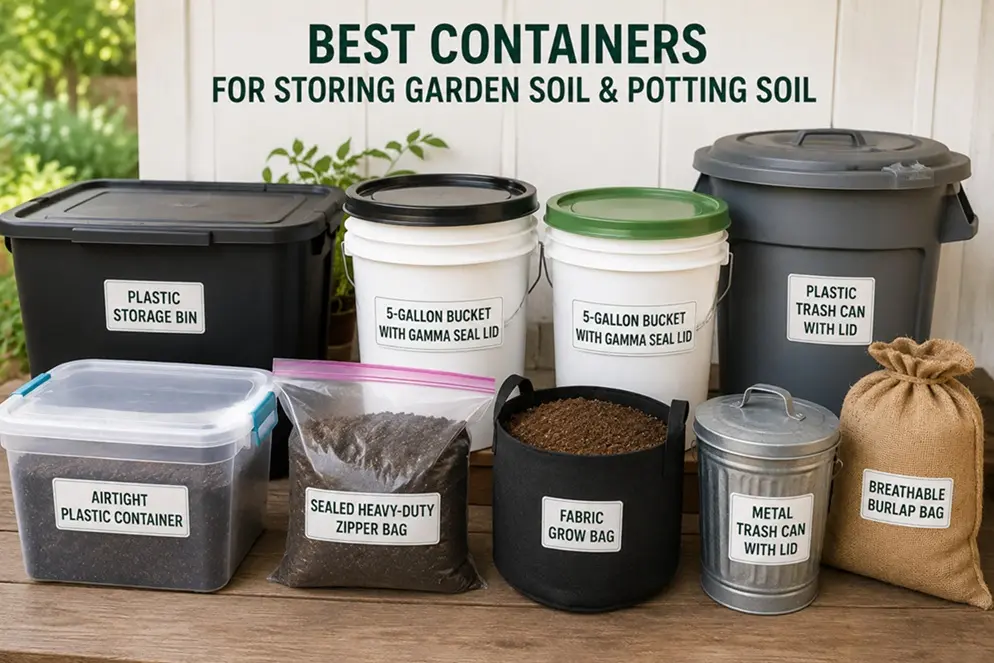
Choosing the right container is just as important as choosing the right storage location. While many gardeners simply leave opened bags of potting soil sitting in the garage or shed, transferring leftover soil into a sealed container offers several advantages. Proper storage helps preserve moisture levels, reduces the risk of pest infestations, and protects the soil from contamination. However, it’s also important to understand that soil is a living material, and maintaining the right balance between protection and airflow is key to keeping it healthy and usable.
Moisture Control
One of the biggest benefits of storing potting soil in a sealed container is maintaining proper moisture levels. Soil that is left exposed to the air can dry out over time, especially in warm garages, sheds, or greenhouses. Excessively dry soil can become compacted and difficult to rehydrate, while beneficial microorganisms may decline when moisture levels drop too low. A covered container helps the soil retain a stable moisture balance, keeping it in better condition and ready to use when planting season arrives.
Pest Prevention
Open bags of potting soil can quickly become an inviting home for unwanted pests. Fungus gnats, ants, spiders, earwigs, and even rodents may find their way into exposed soil. Once pests establish themselves, they can spread to nearby plants or create additional problems throughout your growing area. Storing soil in a container with a secure lid creates a barrier that helps prevent insects and animals from accessing the soil while also protecting it from debris, weed seeds, and other contaminants.
Air Exchange
Although protecting soil is important, completely airtight storage isn’t always ideal for long-term soil health. Potting soil contains beneficial microorganisms that require some level of oxygen to survive. When soil is sealed for extended periods without any air exchange, anaerobic conditions can develop, causing unpleasant odors and potentially harming the microbial life that contributes to healthy plant growth. For long-term storage, it’s best to keep soil in containers that are secure and moisture-resistant while still allowing for occasional ventilation when needed. This helps maintain a healthier soil environment and reduces the risk of stale or sour-smelling soil.
How To Properly Store Potting Soil for Long-Term Use
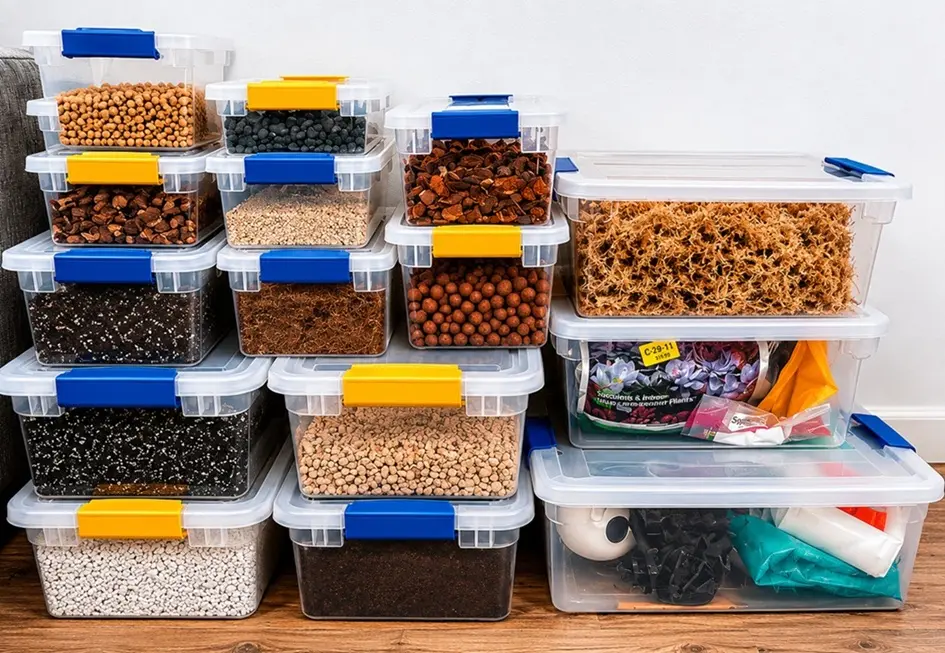
Storing Potting Soil Correctly For Future Use
Properly storing potting soil and garden soil is simple, but following a few best practices can make a big difference in preserving its quality. The goal is to protect the soil from excess moisture, pests, contamination, and extreme temperatures while maintaining the beneficial structure and microorganisms that support healthy plant growth. Whether you’re storing a partially used bag for a few weeks or saving leftover soil for next season, these simple steps will help keep your soil fresh and ready to use.
Choose the Right Container
The best way to store potting soil is in a sturdy, heavy-duty plastic tote or storage bin with a secure-fitting lid. These containers protect the soil from rain, humidity, insects, rodents, and other contaminants that can quickly ruin an open bag of soil.
However, completely airtight storage isn’t always ideal for long periods. Soil contains beneficial microorganisms that need some oxygen to survive. If your storage bin has an airtight seal, consider leaving the lid slightly cracked or drilling a few small ventilation holes near the top of the container. Cover any holes with fine mesh screening to prevent insects from entering while still allowing gentle airflow. This helps reduce the risk of stale, sour-smelling soil caused by anaerobic conditions.
Store Soil in the Right Environment
Location matters just as much as the container itself. Always store potting soil in a cool, dry, and shaded area such as a garage, basement, utility room, or covered garden shed. These environments help maintain stable temperatures and reduce moisture buildup.
Avoid storing soil in direct sunlight whenever possible. Prolonged exposure to sunlight can cause plastic containers and soil bags to deteriorate over time. Heat can also create condensation inside storage containers, leading to mold, mildew, algae growth, and nutrient breakdown. A consistently cool and dry storage location will help keep your soil in usable condition for much longer.
Seal Open Soil Bags Properly
If you prefer to keep your soil in its original bag, make sure the bag is tightly sealed after each use. Open bags allow moisture, insects, weed seeds, and debris to enter the soil, which can create problems later when you’re ready to use it.
Roll the top of the bag down several times to create a tight seal, then secure it with heavy-duty clips, zip ties, or strong duct tape. For added protection, place the sealed bag inside a larger storage tote or plastic bin. This extra layer of protection helps prevent punctures, pest infestations, and accidental water exposure.
Monitor Moisture Levels Regularly
Even when stored correctly, it’s a good idea to periodically inspect your stored soil. If the soil becomes excessively wet, develops a musty odor, or feels soggy to the touch, excess moisture may be trapped inside the container.
When this happens, remove the lid and allow the soil to air out in a well-ventilated area for several hours. Stirring the soil gently can help release trapped moisture and improve airflow throughout the container. Once the soil has dried to a slightly moist, crumbly consistency, replace the lid and return it to storage.
Regular checks can help prevent mold growth, foul odors, and soil degradation, ensuring your potting mix remains healthy and ready for your next gardening project.
Final Thoughts on Storing Garden Soil and Potting Soil
Properly storing garden soil and potting soil is one of the easiest ways to protect your gardening investment and ensure your soil remains healthy and ready to use when you need it. By choosing the right storage container, keeping soil in a cool and dry location, and protecting it from excess moisture, pests, and contamination, you can significantly extend its lifespan and maintain its quality.
Whether you’re saving leftover potting mix from this season or storing bulk soil for future projects, a few simple storage practices can prevent mold, pest infestations, nutrient loss, and unnecessary waste. Before using stored soil, always inspect it for signs of moisture problems, odors, or pests, and refresh older soil with compost or fertilizer if needed.
With proper storage, your garden soil and potting mix can remain a valuable resource for future planting seasons, helping you save money while giving your plants the healthy growing environment they deserve.