How to Grow a Spider Plant in Kokedama (A Beautiful Japanese Moss Ball Method)
The Ancient Japanese Technique That Turns a Spider Plant Into Living Art
If you’re looking for a unique way to display your spider plant, the centuries-old Japanese art of kokedama may be exactly what you’re looking for.
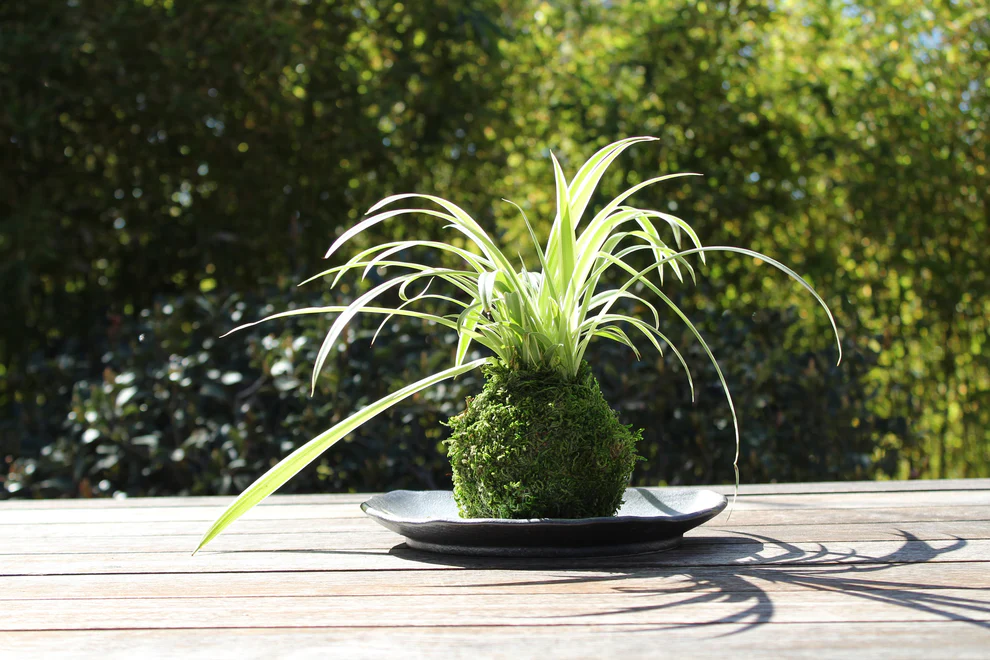
Instead of growing in a traditional pot, the plant’s roots are wrapped in a ball of soil and covered with living moss, creating a beautiful sculptural display that can be placed on a decorative dish or suspended from the ceiling. The result is a minimalist piece of living art that highlights the graceful arching foliage and cascading spiderettes that make spider plants so popular.
Even better, spider plants are one of the easiest houseplants to grow as kokedama because their natural growth habits work perfectly with this method.
What Is Kokedama?
Kokedama (苔玉), which translates to “moss ball,” originated in Japan hundreds of years ago and is closely related to the art of bonsai. Rather than planting in a decorative container, the roots are enclosed inside a compact ball of soil wrapped with moss and secured with cotton thread or fishing line.
The finished moss ball can sit on a ceramic tray, wooden stand, or be suspended with twine, allowing the plant to become the centerpiece instead of the container.
Today, kokedama has become increasingly popular around the world as a creative way to display houseplants while embracing a simple, natural aesthetic.
How to Make a Spider Plant Kokedama Step-by-Step
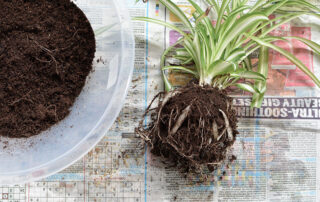
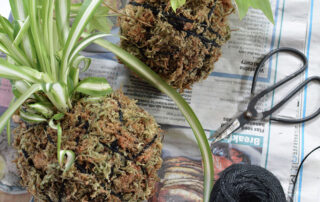
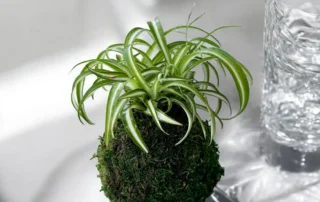
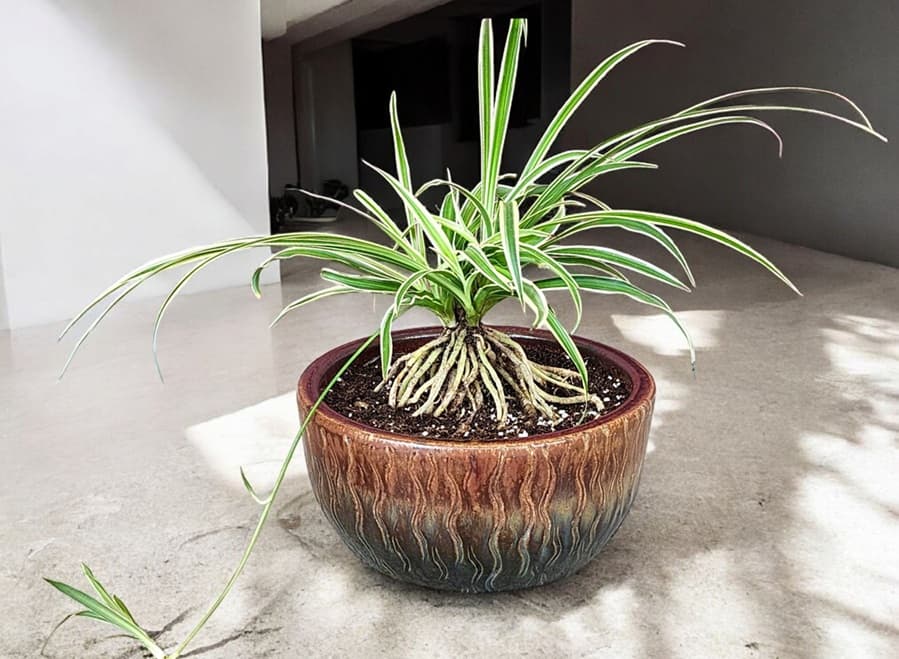
Making a spider plant kokedama is much easier than it looks, and it’s a fun afternoon project for both beginners and experienced plant lovers. Start by removing your spider plant from its pot and gently loosening the soil around the roots. There’s no need to remove every bit of soil—just enough to shape the root ball into a compact sphere. If the roots are extremely long, you can trim them back slightly without harming the plant.
Next, wrap the root ball with damp sphagnum moss, pressing it firmly until it forms a tight, even ball around the roots. Use cotton string, jute twine, or fishing line to wrap around the moss several times in different directions until everything feels secure. The moss should stay firmly in place without falling apart when you pick it up.
Once your spider plant kokedama is assembled, soak the entire moss ball in room-temperature water for about 5 to 10 minutes. Lift it out and gently squeeze away any excess water before placing it on a decorative dish or hanging it with twine. Position your finished kokedama in bright, indirect light, and water again whenever the moss ball feels noticeably lighter than usual. With just a little care, your spider plant will continue growing and eventually produce the same cascading leaves and baby spiderettes it would in a traditional pot—but with a much more artistic presentation.
Why Spider Plants Are Perfect for Kokedama
Not every houseplant adapts well to growing in a moss ball, but spider plants seem almost made for it.
Spider Plants Naturally Like Cozy Roots
One of the biggest reasons spider plants thrive in kokedama is because they actually prefer growing with slightly crowded roots. Unlike plants that constantly need larger pots, spider plants often produce more foliage, flowers, and babies when their roots are comfortably confined.
The compact moss ball provides exactly the kind of environment spider plants naturally enjoy while still allowing excellent air circulation around the root system.
Their Cascading Growth Looks Incredible
Spider plants are famous for producing long runners covered in baby spider plants.
When displayed in a traditional hanging basket, these babies spill over the sides. But when grown as kokedama, the effect becomes even more dramatic. The moss ball seems to disappear beneath the foliage, creating the illusion that the plant is floating in midair while dozens of spiderettes cascade gracefully below.
Curly varieties such as Bonnie Curly are especially striking because their twisting leaves add movement and texture from every angle.
It’s a Beautiful Way to Save Space
Spider plants can become surprisingly large over time, especially mature plants with dozens of babies.
Growing them as kokedama allows you to hang them near windows, from shelves, or even from the ceiling, freeing up valuable table and floor space. Hanging displays also help keep curious cats and dogs away from the foliage, making it a practical option for pet owners.
Spider Plants Tolerate the Watering Routine Well
Unlike many houseplants that dislike drying out between waterings, spider plants are fairly forgiving.
Their thick, fleshy roots store water, allowing them to tolerate the soak-and-dry watering cycle that kokedama requires. This natural drought tolerance makes them one of the easier plants for beginners trying their first moss ball.
How to Care for a Spider Plant Kokedama
Watering
Instead of watering from above, soak the entire moss ball in room-temperature water for about 5 to 10 minutes whenever it begins to feel noticeably lighter in your hand.
Once the bubbles stop rising, remove the moss ball and gently squeeze it just enough to remove excess water. Allow it to drip dry completely before placing or hanging it back in its display location.
Avoid keeping the moss constantly wet, as overly saturated conditions can eventually lead to root problems.
Light
Spider plants grown in kokedama still have the same lighting needs as those grown in pots.
Provide bright, indirect light for the healthiest growth. Morning sun is generally fine, but avoid prolonged harsh afternoon sunlight, which can scorch the leaves and dry the moss ball much more quickly.
Fertilizing
Feed your kokedama sparingly.
Once a month during spring and summer, add a balanced liquid houseplant fertilizer at ¼ to ½ strength to your soaking water. Because the moss ball contains only a limited amount of soil, over-fertilizing can cause salt buildup that damages the roots.
Does a Spider Plant Need to Stay in Kokedama Forever?
Not at all.
Over time, the roots will eventually outgrow the moss ball. At that point, you have two options: rebuild the kokedama using fresh moss and soil, or simply pot the spider plant into a traditional container.
Spider plants transition surprisingly well between pots and kokedama as long as the roots are kept healthy.
Final Thoughts About Styling Spider Plants with Kokedama
A spider plant kokedama is more than just a different way to grow a houseplant—it’s a beautiful conversation piece that combines centuries-old Japanese tradition with one of the easiest plants to care for.
Whether you display it on a decorative dish or suspend it from the ceiling, the combination of lush arching foliage, cascading babies, and a simple moss-covered sphere transforms an ordinary spider plant into living art.